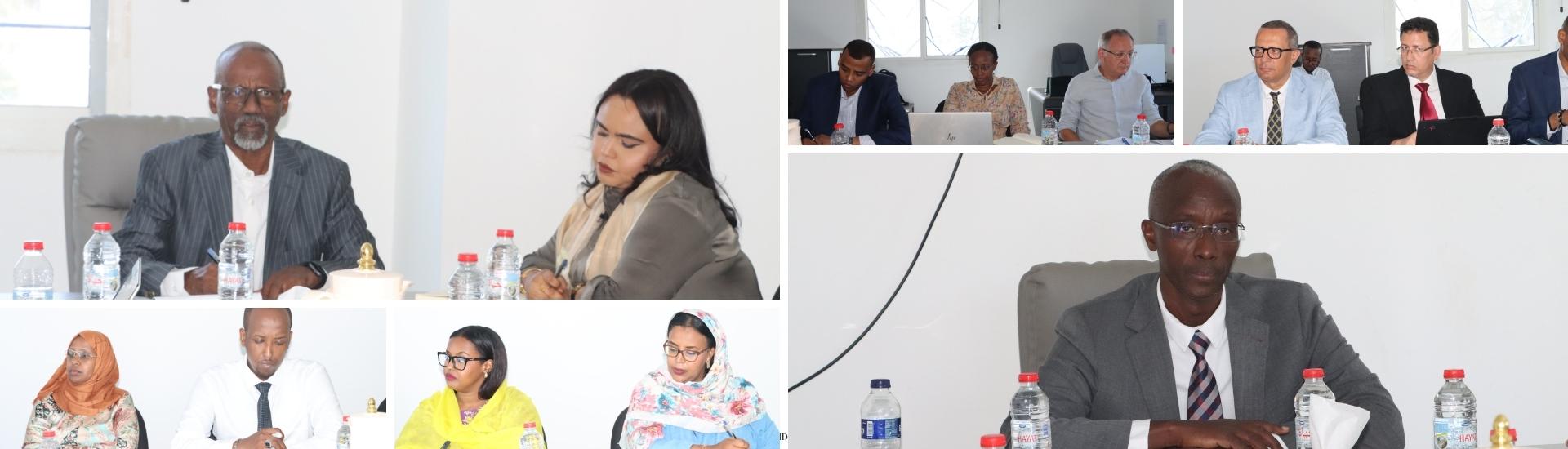




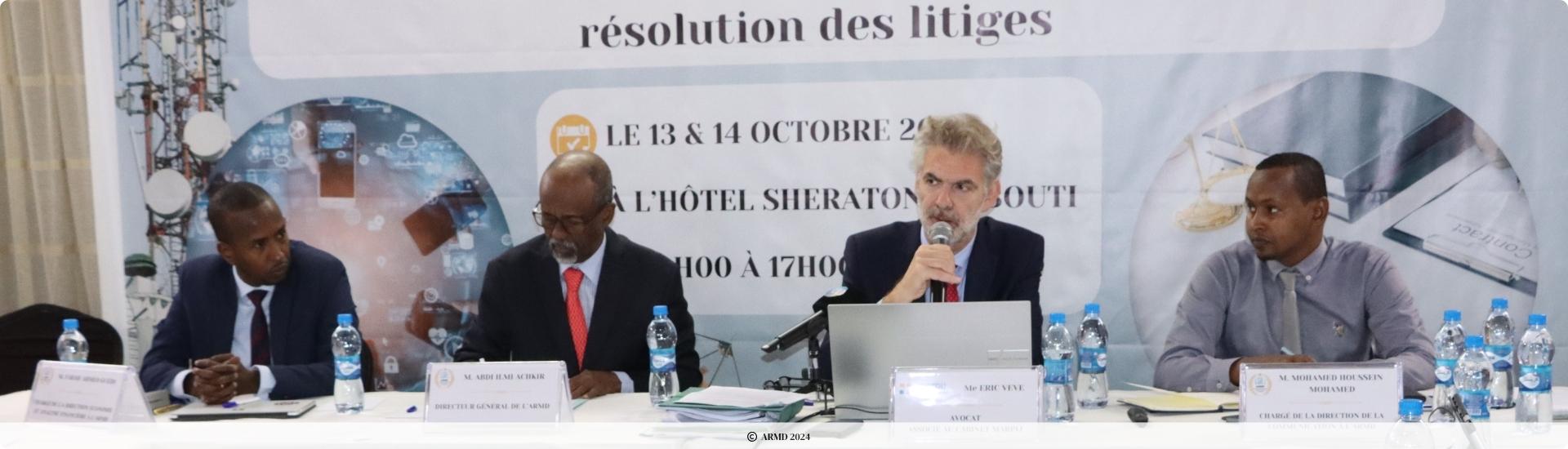
The Multisectoral Regulatory Authority of Djibouti (ARMD) organized a training workshop conducted by the MARPIJ Firm from October 13 to 14, 2024, at the Sheraton Hotel. This workshop brought together ARMD staff, representatives from the Ministry of Communication, in charge of Posts and Telecommunications (MC-PT), representatives from telecommunications operators such as Djibouti Telecom, TO7, and Afrifiber, as well as 5 magistrates from Djiboutian courts.
The workshop was opened by the Director General, who emphasized the importance that ARMD places on consumer protection, which is one of its primary missions. The Director General reiterated that ARMD's responsibility is to guarantee the protection of consumer rights and the proper implementation of the regulatory framework. He also thanked the MARPIJ Firm for the support it has provided to ARMD throughout this technical assistance and for the skills enhancement it has brought to ARMD staff in economic, technical, and legal areas.

This workshop is part of a technical assistance program provided by the MARPIJ Firm, which has already organized two other training workshops. The primary objective of this workshop is to assist ARMD in designing and implementing consumer protection procedures and mechanisms in the telecommunications sector. Additionally, the trainer will introduce alternative dispute resolution methods. Furthermore, this workshop provided training for Djiboutian magistrates on issues related to the digital sector and the legal frameworks governing the digital sector in Djibouti.
The technical assistance from the MARPIJ Firm has been divided into two phases: the first phase includes the training on October 13-14 for ARMD, operators, and magistrates; and the second phase consists of the training on October 15 exclusively for ARMD management staff.

During the two-day training session on October 13th and 14th at the Sheraton Hotel, Me Éric Veve, attorney and partner at the MARPIJ firm, addressed several key points regarding consumer protection and dispute resolution. The trainer began by outlining the history and key players in Djibouti's telecommunications sector. The various challenges posed by the liberalization of the telecommunications market, as well as the role ARMD can play in this market transformation, were also analyzed. The objective was to understand ARMD's place within the framework of significant changes brought by the Djibouti 2035 Vision to the digital sector through its opening to competition.
Finally, trainer Me Éric Veve presented the main aspects of telecommunications regulation in Djibouti, drawing on existing regulations and ongoing draft legislation such as the Digital Code. ARMD itself is preparing draft laws aimed at complementing and improving the legal foundation governing the telecommunications sector. Indeed, to better regulate this sector, ARMD must rely on legal foundations that define the prerogatives, obligations, and rights of each digital sector actor.

During the second phase of the training, attorney Me Éric Veve conducted a one-day session at the ARMD headquarters, intended exclusively for the institution's executives. This training primarily focused on alternative dispute resolution methods such as arbitration, mediation, conciliation, amicable settlement hearings, and bifurcation of proceedings, collaborative law, and participatory procedures. These alternative solutions are designed to resolve disputes both between operators and consumers, and among operators themselves.
The objective of implementing these dispute resolution mechanisms is, on one hand, to provide additional solutions (outside of state courts) for handling disputes related to the digital sector.

This workshop concluded the technical assistance provided by the international firm MARPIJ, which has been ongoing throughout this year and was delivered through three training sessions, with this being the final one. The training proved highly valuable for all stakeholders involved. It enabled ARMD staff to enhance their skills in dispute resolution. The magistrates from the Ministry of Justice were also introduced to the existing legal frameworks and pending legislation concerning the digital sector. Meanwhile, the telecommunications operators received training on consumer protection issues to better align with upcoming regulatory changes in their industry.
Source: ARMD